The Advantage of Mechanical Diesel Engines for Bluewater Cruisers
It’s easy to get caught up in the latest technology when researching for a new marine diesel engine. Electronically injected and common rail systems are becoming increasingly common, but when you’re hundreds of miles away from a major port, with limited access to spare parts, a marine mechanic, or even a laptop for diagnosis, simplicity is often a necessity.
That’s why many NANNI engines feature mechanical fuel injection systems, and these are a top choice amongst boaters who can’t compromise on the reliability, easy servicing, and confidence that they deliver.
Mechanical vs Electronic Injection Engines: What’s the Difference?
The way in which fuel is delivered to an engine is one of the biggest distinctions between marine diesel options.
Mechanical injection delivers fuel using a mechanical fuel pump. It functions independently of electronic controls, sensors, or an ECU (engine control unit). With fewer electronic components, there is less that can go wrong, and no need for specialist diagnostic software when something does go wrong.
Electronic injection, or common rail, utilises sensors, ECUs, and other electronics to manage fuel delivery and engine performance. Electronic systems are more modern and offer real advantages in some applications, but they also introduce complexity. More electronic components can mean a greater dependency on specialised parts and tools for repairs.
Both systems have their place, but they offer very different ownership experiences on the water. For bluewater and offshore cruisers, that difference matters. With a mechanical engine, a competent marine mechanic almost anywhere in the world can diagnose and service your engine without specialist tools.
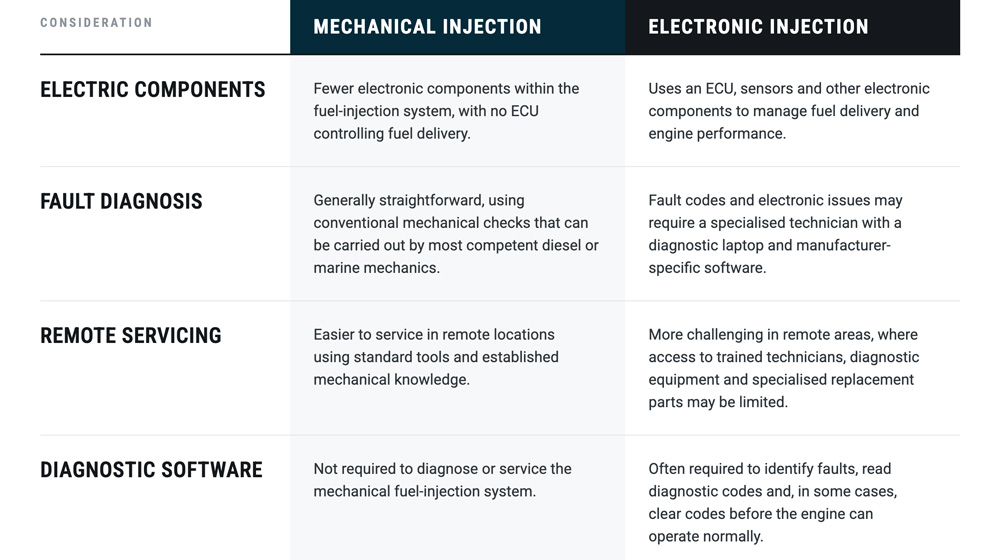
Mechanical vs Electronic Injection Engines: What’s the Difference?
Built for Bluewater Cruising
For bluewater cruisers, reliability is non-negotiable. When you’re exploring remote locations or crossing the open ocean, access to specialist marine technicians and electronic diagnostic equipment can get incredibly difficult.
Mechanical injection engines offer significant advantages in situations like these, with simpler fault diagnosis, easier access to parts, and oftentimes, the ability to complete repairs yourself, or with the help of a marine mechanic.
This was ultimately the deciding factor for popular sailing YouTubers SV Delos, when choosing an engine to power both their new hybrid catamaran, Delos 2.0, and their existing Amel Super Maramu monohull.
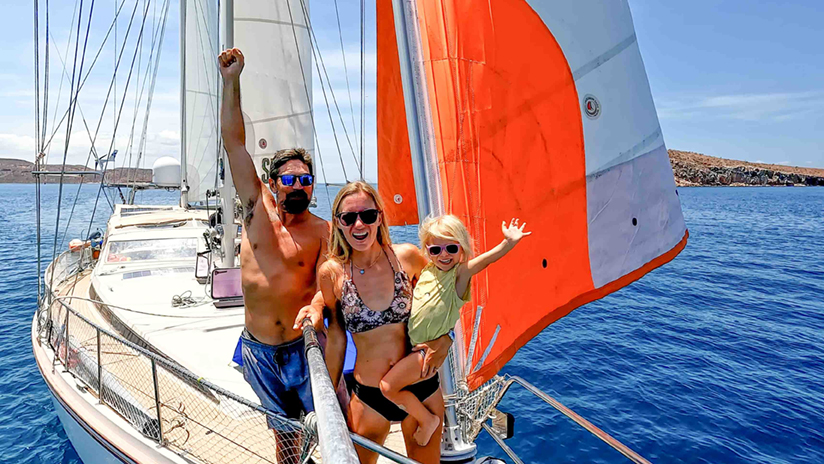
“The driving factor here was the mechanical nature of the engine itself. I’ve experienced way too many cruisers stuck in port waiting for a faulty ECU or other electronic bit to be replaced. These in particular are based on Kubota blocks which are marinized by NANNI. It’s a proven, reliable design,” said Brian Trautman, SV Delos, after selecting a NANNI N4.80 engine.
Proven Technology, Real-World Performance
NANNI’s marine diesel engines are built around one simple rule: deliver reliable performance when it matters most.
By pairing robust engine platforms from the likes of Kubota and Toyota with a mechanical fuel injection system, NANNI engines are reliable, easy to service, and suited to real-world boating conditions.
Sometimes, the most simple solution is the right one.
Thinking About a Repower?
If you’re considering repowering your sailboat or powerboat, the NANNI Australia team can help you find the right engine for your vessel.
Get in touch today to discuss your options.